
Download the Social Responsibility Assessment Tool for the Seafood Sector 2.0
Additional languages coming soon.
Social Responsibility Assessment Tool 2.0 – Revision Overview
In late 2022, LRQA, Conservation International, and FishWise formed the Consortium on Social Risks in Seafood (the ‘Consortium’) with a joint objective to proliferate tools and resources that can be leveraged by seafood suppliers and buyers to implement Human Rights Due Diligence (HRDD) and address human and labor rights risks within seafood supply chains. One of the main tools in the Consortium’s portfolio is the Social Responsibility Assessment Tool for the Seafood Sector, or SRA.
The SRA was originally developed by Conservation International through a multi-stakeholder approach as a means to evaluate human and labor rights risks in seafood supply chains. The risk assessment framework was built on a wide array of normative references, including international policies and conventions, as well as third-party standards and best practices across a variety of commodity sectors, including fisheries and aquaculture. The SRA framework defines a set of data to be collected within a seafood supply chain, that when analyzed together, serves to identify economic, social, and cultural rights risks. SRA results can then be leveraged to develop an action plan towards mitigation and remediation improvements that uphold worker rights and wellbeing. The original version of the SRA was published in 2017 and has been implemented broadly across the world over the past seven years.
With solid bones, the SRA was the tool of choice for many organizations within the sustainable seafood movement to implement risk assessments as part of a holistic HRDD process. However, after seven years of implementation and use, the framework needed an update.
The main objectives of the revision were as follows:
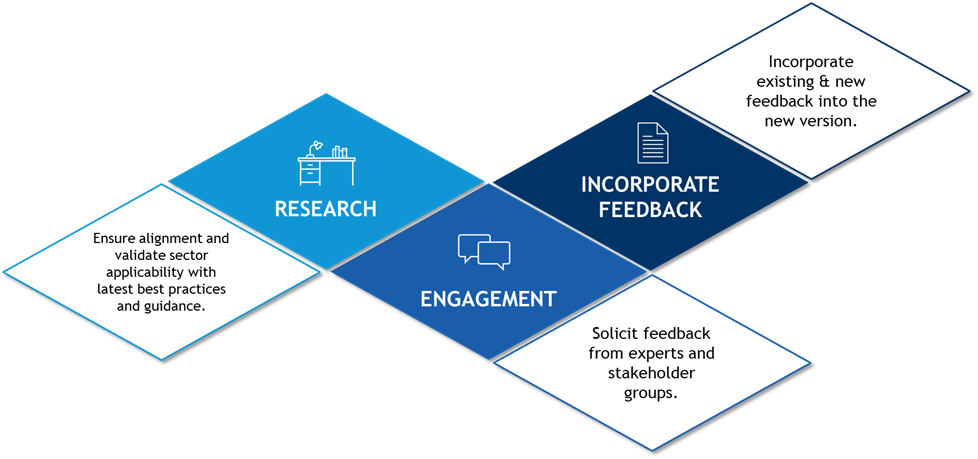
The first step in the SRA revision process was to identify key topics for the revision to guide research and stakeholder outreach. This included feedback that had been tracked over years of SRA implementation, as well as emerging dialogue on social responsibility in seafood. Areas of focus for improvement in the SRA included:
- Interpretation of the SRA for small-scale fisheries
- Interpretation of the SRA for industrial and smallholder aquaculture farms
- Application of the SRA according to workforce characteristics (e.g., crew vs. captain vs. owner-operator, etc.) and the associated applicability logic for each indicator
- Gender transformative approaches in the supply chain
- Wi-Fi / connectivity at sea, as well as time at sea and transshipment
- Prison labor
- Observer rights
- Fair recruitment
- Freedom of association and collective bargaining – barriers vs. rights
Although these were topics with escalated priority, additional topics were also addressed throughout the revision process.
Stakeholder Engagement
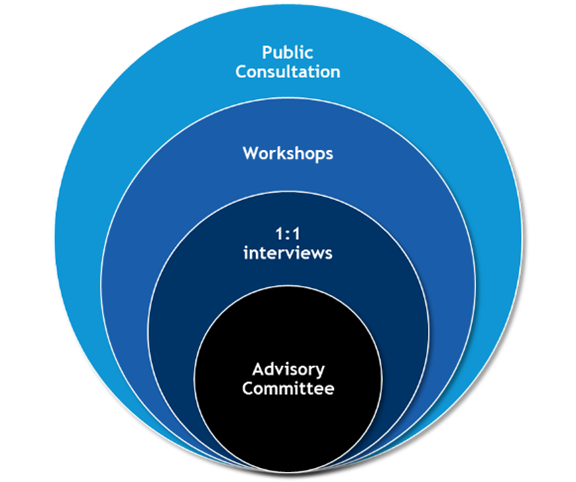
An open access tool like the SRA is meant to serve the broader community, and therefore, community input is critical. As such, the Consortium devised a rigorous stakeholder engagement process that encompassed a number of methods to gather input from diverse perspectives and user groups.
Advisory Committee
The Consortium brought together key experts to serve on an Advisory Committee, which met quarterly throughout the revision process. Advisory Committee members provided critical feedback on specific topics and indicators within the SRA, ensuring the updated risk assessment was adhering to best practice while ensuring the methodology was still feasible to implement. Advisory Committee members included representatives from Dignity in Work for All/Verité Southeast Asia, Ocean Outcomes, FishChoice, ABALOBI, Aquaculture Stewardship Council, IUF, and Aqua Star.
One-on-One Expert Interviews
As the revision topics were being prioritized, the Consortium developed a list of related stakeholders and key experts for one-on-one conversations. These conversations were typically 1-1.5-hour remote or in-person interviews focused on understanding the risks in particular topic areas, and how to reflect those accurately in the SRA. Expert interviews were conducted on topics such as gender, freedom of association, fair recruitment, industrial fishing, small-scale fishing, and aquaculture farms, among others.
Stakeholder Workshops
Over the course of two years, the Consortium held three stakeholder workshops to conduct outreach with specific groups, garnering unique input into the SRA revision process. The first workshop gathered ten stakeholders from the aquaculture sector for a facilitated discussion to validate how social risks manifest in the aquaculture sector compared to wild-capture fishing vessels. A second workshop was held with a group of 15 fishers from different backgrounds, including migrant fishers fishing abroad, vessels with hired crew, and self-employed individual operators. Participants discussed similarities and differences across these different types and scales of industry. Lastly, an implementer workshop was held with eight SRA implementers spanning Latin America, North America, South East Asia, and the Pacific Islands. This workshop enabled individuals who routinely implement the SRA to have more technical discussions, and the group worked through difficult topics on the practical application of the SRA and how to improve consistency of implementation in various contexts.
Aquaculture Surveys
Noting that adaptation of the SRA to better suit the aquaculture sector was a key focus of the SRA, the Consortium hired three contractors based across Africa and Indonesia to conduct surveys with local aquaculture farmers, workers, and management regarding social risks. These surveys reached over 300 workers, including both men and women, and spanned smallholder and industrial farms. The results culminated in clear insights about social risks in aquaculture and how these can be better evaluated when applying the SRA in the aquaculture sector.
Public Consultation
In addition to active outreach by the revision team, the Consortium also held an open public consultation to gather additional feedback from the general public. This entailed curation of several key questions in survey format, as well as general feedback on the SRA. This generated over 180 unique comments from 23 individuals representing 19 organizations. A mix of FIP implementers, non-governmental organizations, industry, and labor groups provided comments.
SRA 2.0 – What’s New
The culmination of extensive research and stakeholder engagement is the updated SRA, version 2.0, now available on the RISE website. While several small changes were made throughout the entirety of the document, some of the major changes you can expect to see in SRA 2.0 include:
- Updated terminology, emphasizing data collection as the enabling mechanism of the SRA framework.
- New guidance for data collection points to help assessors interpret the SRA and updated applicability logic to ensure accuracy of implementation in different contexts.
- Re-organization of indicators and components and removal of redundant data collection points to improve flow.
- Updated scoring logic that sets policies and procedures as a minimum expectation and more consistent language to streamline scoring across indicators.
- New indicators on fair recruitment and observer rights.
- Inclusion of references to Wi-Fi best practices, connectivity at sea, AIS/VMS data and coverage, and prison labor, among others.
- More in-depth analysis capabilities on forced labor according to the most up-to-date best practices.
- Narrative descriptions for each indicator to underpin the objective of that indicator.
- Clarity on data collection for small-scale fisheries and aquaculture farms (including smallholder farmers and industrial operations).
- Clearer outline for data collection regarding governance, both in resource management and in the workforce.
- New guidance to help drive development of an action plan (e.g., high risk urgent high risk prioritize).
This non-exhaustive list serves to summarize the key areas that have been included and/or streamlined as part of the SRA revision.
Please join us in celebrating the release of the updated SRA 2.0! Additional translations, templates, training, and tools will be released in the coming weeks, so stay tuned for more information on how to access these supporting materials. We encourage you to reach out with any questions about the revision process or questions about the SRA itself and how you might leverage this tool to evaluate and address human and labor rights risks within your supply chains.